
By Embodied Consciousness
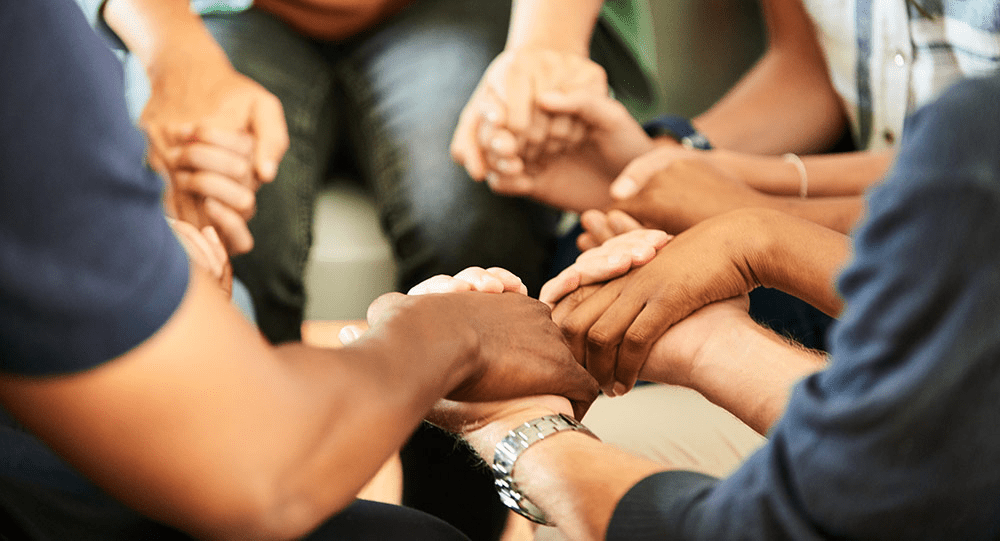
“Sat-saṅga (Good company) leads the mind toward clarity and liberation; asat-saṅga (Bad company) binds it to confusion and suffering. The company we keep silently shapes the direction of our inner life.”
— Inspired by Sanātana Dharma (Vedāntic wisdom on sat-saṅga)
In the contemplative traditions of Sanātana Dharma, sat-saṅga—the company of truth, clarity, and awakened presence—is not treated as a mere social preference, but as a decisive force in inner transformation. Equally, asat-saṅga, or the company of distortion, distraction, and unconsciousness, is understood to subtly entangle the mind in patterns of suffering.
This distinction is not moralistic. It is deeply psychological, even ecological in nature. The human mind is not an isolated entity—it is continuously shaped through relationship, resonance, and environment.
In this sense, healing is never only an individual process. It is always relational.
Modern culture, however, often frames healing as a solitary journey. We imagine someone meditating alone, journaling through pain, reading self-help books, or retreating inward to “fix themselves.” While inner reflection is essential, this framing leaves out a fundamental truth:
Human beings are not designed for isolated healing. We are designed for relational becoming.
The path toward wholeness is rarely walked alone. Whether we are moving through emotional trauma, grief, burnout, illness, or transitions that reshape identity itself, community often functions as the unseen architecture that supports transformation.
Healing Happens in Relationship
From the beginning of life, our nervous systems are shaped through connection. Safety is not initially an idea—it is an experience of attunement, touch, presence, and relational trust.
And correspondingly, many of our deepest wounds also arise in relationship: through abandonment, rejection, mis-attunement, betrayal, or emotional absence.
This is why healing often cannot be completed in isolation. What is wounded in connection often requires connection to heal.
A supportive community offers something no purely individual practice can fully replace: the experience of being seen without needing to perform, and being held without needing to hide.
When another person listens without judgment, or meets us with quiet understanding, something subtle yet profound begins to reorganize within us. The internal narrative of isolation loosens. The body begins to register safety again. The psyche begins to soften.
We realize, sometimes for the first time:
I am not alone in this.
The Biology of Belonging
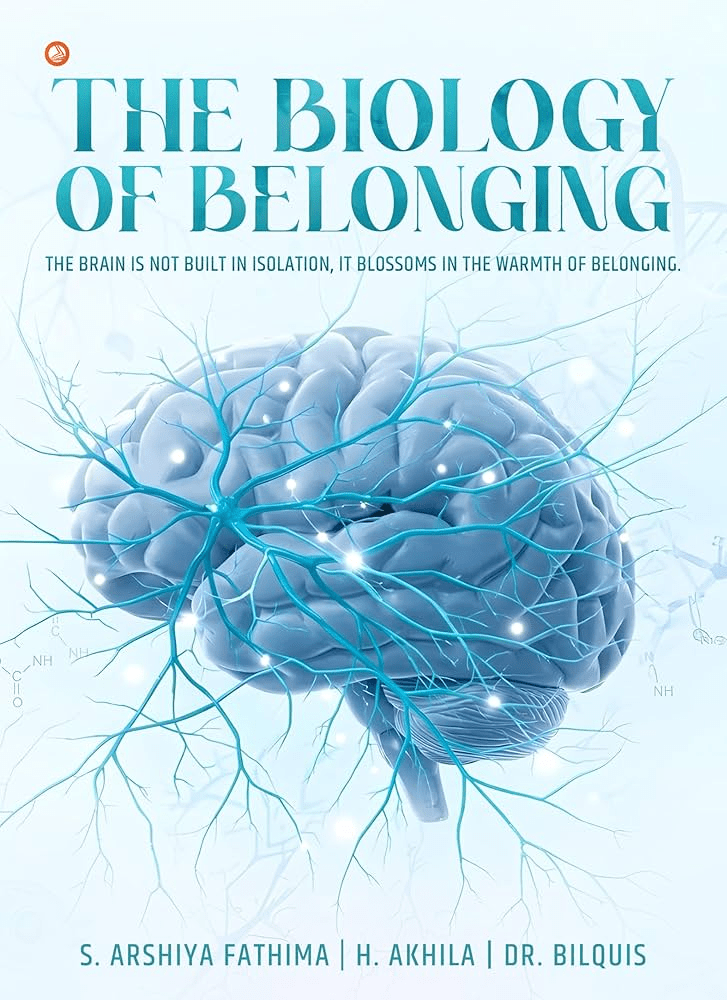
What ancient traditions describe as sat-saṅga, modern science increasingly describes in physiological terms: co-regulation, nervous system attunement, and stress modulation through social connection.
When we experience genuine belonging:
- Stress responses soften
- The nervous system stabilizes
- Emotional resilience increases
- The body shifts toward repair and restoration
- Psychological flexibility improves
We do not heal in a vacuum. Our biology is continuously in conversation with the presence of others.
A calm, grounded person can regulate an anxious nervous system. A compassionate group can hold emotional intensity that would otherwise feel unmanageable alone. In this way, community becomes not just emotional support, but biological support.
Witnessing and Being Witnessed

One of the deepest dimensions of healing is the experience of being witnessed.
Many people carry their suffering in silence, believing it is either too much, too complex, or too personal to share. Silence often turns pain inward, where it transforms into shame, self-judgment, or emotional fragmentation.
But when lived experience is spoken into a safe space and received with presence, something essential changes.
In genuine community, we begin to hear new internal truths emerge:
- I do not have to carry this alone
- My experience is valid
- My emotions make sense in context
- I am still worthy of connection
Being witnessed does not erase pain—but it transforms its texture. What was once isolating becomes shared humanity.
Community as a Mirror of Becoming
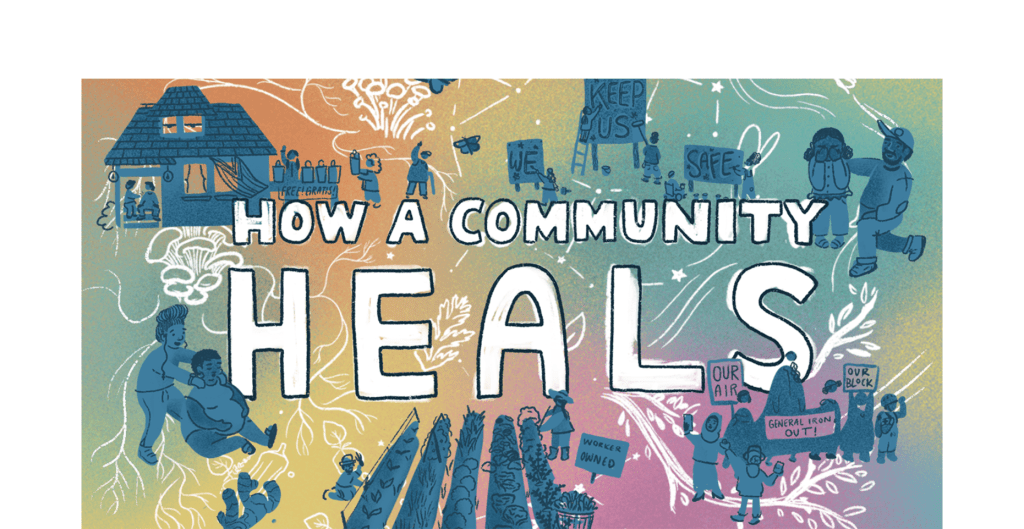
Community does more than support us—it reflects us.
Healthy relationships act as mirrors that help us see aspects of ourselves that are difficult to perceive alone. Sometimes they reflect strengths we have not yet recognized. Sometimes they gently reveal patterns we have normalized.
This reflective function is not about correction—it is about revelation.
Through others, we begin to see:
- Where we are growing
- Where we are stuck
- Where our narratives are outdated
- Where our potential is larger than our fear
In this way, community becomes a field of ongoing self-discovery.
The Courage to Receive
For many, offering support feels easier than receiving it. Receiving requires a different kind of vulnerability—the willingness to not be in control, not be self-sufficient, not be “the strong one.”
Yet healing often asks for precisely this:
The courage to be supported.
Receiving is not dependency in the unhealthy sense—it is recognition of interdependence as a fundamental condition of life.
Nature itself reflects this truth. No forest exists as isolated trees. No ecosystem survives through independence. Life is sustained through constant exchange.
Human healing is no different.
Creating Healing Spaces
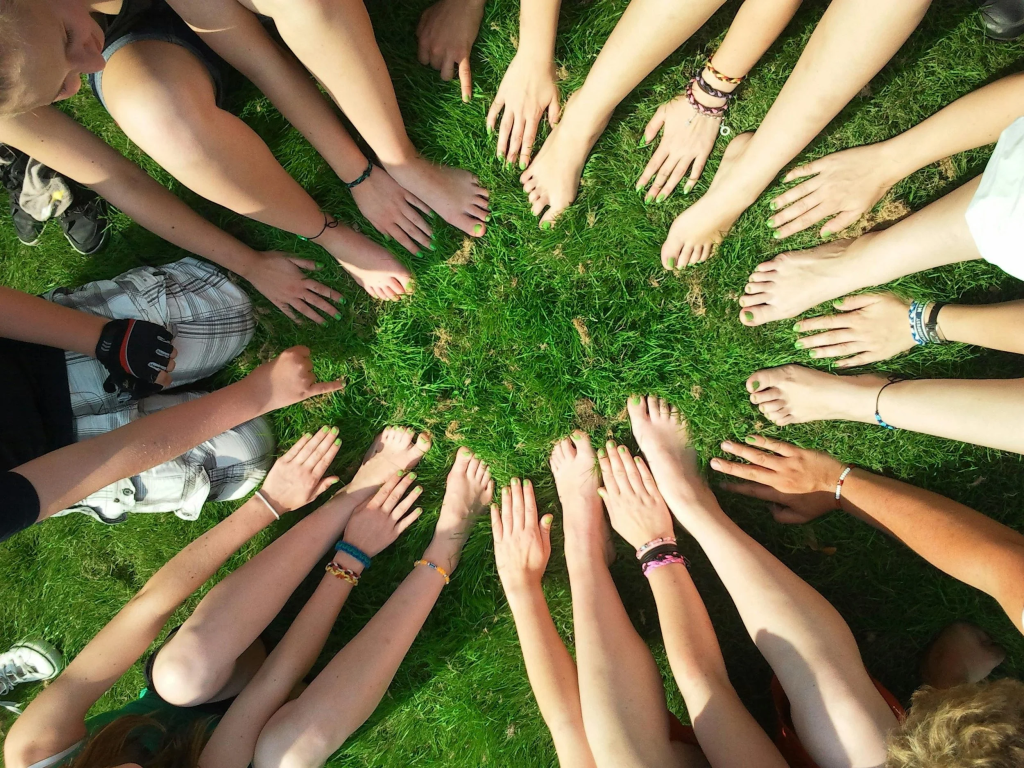
A healing community does not need to be large or formal. It often begins quietly—with a few people committed to presence, honesty, and care.
Such spaces tend to share certain qualities:
Psychological Safety
The nervous system can relax because judgment is not the organizing principle.
Attuned Listening
People listen not to respond, but to understand.
Authentic Expression
Emotions are not edited for acceptability.
Mutuality
Support flows in multiple directions, not a single hierarchy.
Shared Intention
There is an implicit commitment to growth, awareness, and care.
These qualities transform ordinary gatherings into spaces of restoration.
The Inner Sat-Saṅga

As external community supports healing, something parallel begins to develop internally.
The psyche itself starts to reorganize into a more compassionate inner ecosystem. Previously fragmented parts of the self begin to relate with less hostility and more understanding.
In time, we begin to internalize what healthy community feels like.
The presence we once sought outside gradually becomes something we can offer inwardly.
This is perhaps one of the deepest gifts of sat-saṅga: it teaches us how to become a place of refuge for ourselves.
Final Reflections

Healing is often described as a personal journey. But in truth, it is more accurately a relational unfolding.
We do not become whole in isolation—we become whole in connection.
Sanātana Dharma’s wisdom on sat-saṅga and asat-saṅga quietly points to this: that the company we keep is never neutral. It shapes our nervous system, our perception, our inner narratives, and ultimately, our capacity to heal.
To heal in community is to remember something essential:
We were never meant to carry life alone.
And in the presence of true connection, something simple yet profound becomes possible:
We do not just survive together—we begin to heal together.

Leave a Reply